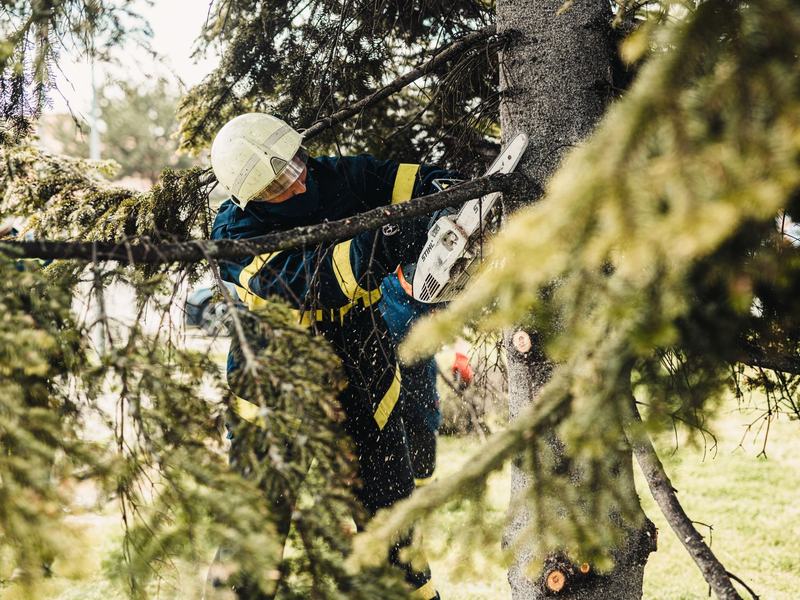
Rockford weather and ground conditions make late winter useful for many planned removals, but unsafe trees should not wait for a perfect season. Frozen ground, spring rain, summer storms, and fall leaf drop all affect the job.
For planned removal, late winter is often a practical time in Rockford. Trees are usually leafless, the structure is easier to see, and frozen ground can reduce rutting in a yard. Crews may also have more room on the schedule before spring storm calls begin.
This does not mean every winter day is suitable. Ice, high wind, deep snow, and temperatures that make equipment unsafe can delay the work. Ask how the contractor will protect the lawn and driveway if the ground is thawed or soft.
Rockford-area yards can include heavy, compacted soils that hold water, especially in low spots and after snowmelt. Spring rain can make a lawn soft enough for tires, logs, and a bucket truck to leave deep ruts. A company may postpone a non-urgent removal until the ground firms up.
The Rock River and nearby drainage areas can also mean wetter ground in some neighborhoods. The exact soil varies by lot, so a contractor should inspect access rather than promise that a machine will fit without damage. Temporary mats can spread weight, but they do not make saturated soil dry.
Summer removal is possible, but thunderstorms, heat, and full foliage can make inspection and rigging more difficult. A tree that looks healthy from the ground may contain dead limbs hidden by leaves. Schedule early in the day when possible, and expect delays during periods of high wind or lightning.
Fall is a good time to remove trees that are already identified as weak before winter snow and ice. Leaf cleanup may add to the work, and shorter daylight can affect scheduling. Once leaves drop, the tree's branch structure is easier to inspect.
Rockford has dealt with damaging wind, severe thunderstorms, and winter weather over the years. The June 2015 northern Illinois tornado outbreak included a tornado that affected the Rockford area, and the April 2023 severe storm outbreak brought damaging winds and widespread cleanup across northern Illinois. These events show why local crews can become booked quickly after a major storm.
The National Weather Service Chicago office documents warnings and storm reports for the region. After a storm, look for fresh cracks, hanging branches, lifted roots, leaning trunks, and bark pulled away from the trunk. A tree can remain standing while its root plate has shifted.
Do not wait for winter if a tree is split, uprooted, hanging over a house, or blocking a driveway. Keep people away from the area and call a tree professional for an inspection. If a power line is involved, stay away and contact the utility first. Downed lines can remain energized even when they look harmless.
For a healthy tree with a minor dead limb, seasonal scheduling is reasonable. For a tree with active movement, a fresh crack, or roots lifting from the soil, safety comes first. Ask the contractor whether the tree needs immediate removal or if a short-term reduction of risk is possible.
Also in our network: Best Time for Tree Removal in Iowa City: Seasonal Guide, Best Time for Tree Removal in Davenport, Iowa.
Send us a few details and a photo and we will get you a free quote.
Get my free quote ROCKFORD